
Altitude does not end when the shift closes
In Atacama mining, a relevant share of work takes place in the Andes, with sites and projects operating around 3,500-4,800 m above sea level. At that elevation, the issue is not only temperature, wind or logistics. The body works under lower oxygen partial pressure, which can affect sleep, recovery, effort tolerance and operational clarity. For that reason, coming down to sleep at low altitude in Caldera or Bahía Inglesa should be framed as a performance and HSE decision, not as executive comfort.
The CDC Yellow Book states the physiology carefully: at altitude, hypoxic stress depends on elevation, rate of ascent and exposure time. Around 3,050 m, inspired oxygen pressure can be materially lower than at sea level, and hypoxemia tends to be greatest during sleep. It also notes that sleep disturbance is common above 2,700 m. In mine-site language, a person can complete a technically sound day at altitude and still recover poorly if the night is spent at the same elevation.
What can be stated responsibly
It would be wrong to promise that sleeping in Caldera eliminates incidents, cures altitude illness or replaces a medical program. Individual physiology varies, acclimatization takes time and HSE decisions must be validated by each company occupational health team. What can be stated responsibly is that a low-altitude rest strategy reduces overnight exposure to hypoxia, improves the recovery margin after demanding days and makes sleep, hydration and meal routines easier to control.
For key personnel, that margin matters. Project managers, senior supervisors, EPCM teams, auditors, commissioning specialists and technical visitors often concentrate critical decisions into short windows. If they also need to drive, review permits, coordinate contractors or respond to contingencies, fatigue stops being a personal matter and becomes an operational risk.
Why Caldera works as a recovery base
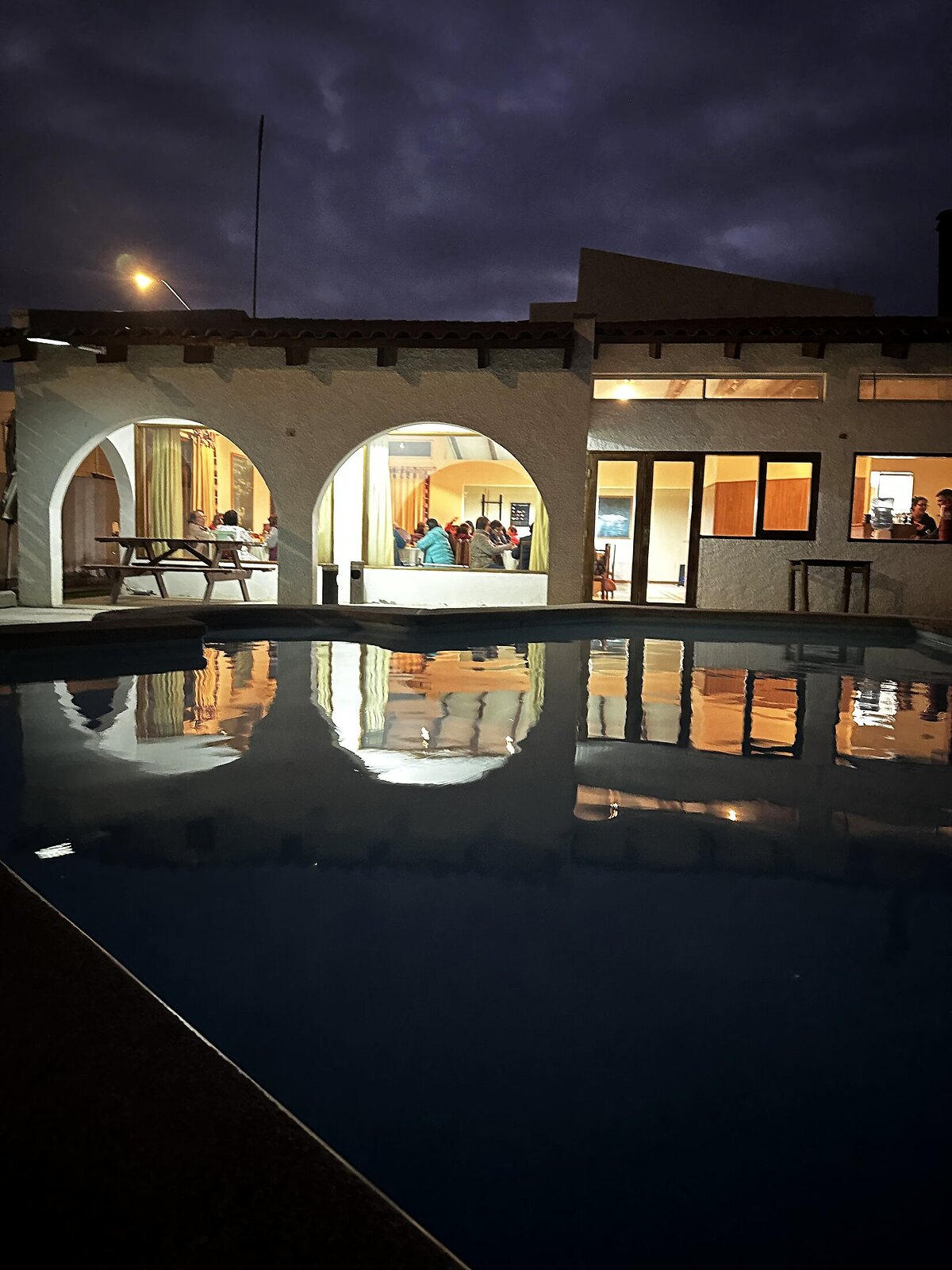
Caldera and Bahía Inglesa sit on the coast. Bahía Inglesa is listed at roughly 10 m average elevation, while Caldera operates as a port city in the Atacama Region. For Playa Blanca · Base Ejecutiva Privada, that location separates two moments that mining operations should not confuse: high-altitude work exposure and low-altitude overnight recovery.
The logic is straightforward. Go up to site for meetings, inspections, commissioning or progress control. Return to the coast to sleep, consolidate decisions, prepare the following day and reduce operational noise. This is not tourism. It is agenda discipline.
HSE controls that must support rest
Executive lodging does not solve fatigue on its own. It must be integrated with clear controls: realistic itineraries, transfer windows, driving policy, fitness-for-work checks, alcohol restrictions, available hydration, food service aligned with early departures, stable connectivity and emergency procedures. If the team is coming from or going to sites above 3,500 m, symptom tracking is also advisable, along with avoiding non-prescribed sedatives and escalating any altitude-illness signs under the company medical procedure.
The advantage of a private facility is control. Less noise exposure, less check-in friction, schedules aligned with operations and briefing space without depending on the traffic of a tourist hotel. During compressed agendas, that predictability protects rest quality.
Operating thesis
For Atacama mining, sleeping at sea level after working in the Andes should not be sold as leisure. It should be specified as part of a fatigue architecture: less overnight exposure to hypoxia, more orderly recovery, better preparation for critical decisions and a private base near Caldera, port assets, the airport and inland routes. Distances to each site should be treated as estimates and validated against real access, weather, convoy rules, permits and gate location.
Verification sources
CDC Yellow Book, High-Altitude Travel and Altitude Illness: https://www.cdc.gov/yellow-book/hcp/environmental-hazards-risks/high-altitude-travel-and-altitude-illness.html
Caserones, high-Andean operation: https://www.caserones.cl/nuestra-operacion/
Gold Fields, Salares Norte and high-altitude Atacama operations: https://www.mch.cl/gold-fields-y-salares-norte-en-2026-esperamos-producir-sobre-500-mil-onzas/
CCM-Eleva, large-scale mining workforce study 2025-2034: https://ccm-eleva.cl/wp-content/uploads/2025/12/Estudio-Fuerza-Laboral-de-la-Gran-Mineria-2025-2034.pdf